
How Long Do Seamless Gutters Last
Seamless gutters are built for long-term water control, but their lifespan depends on installation quality, drainage design, material strength, debris load, weather exposure, and ongoing maintenance.
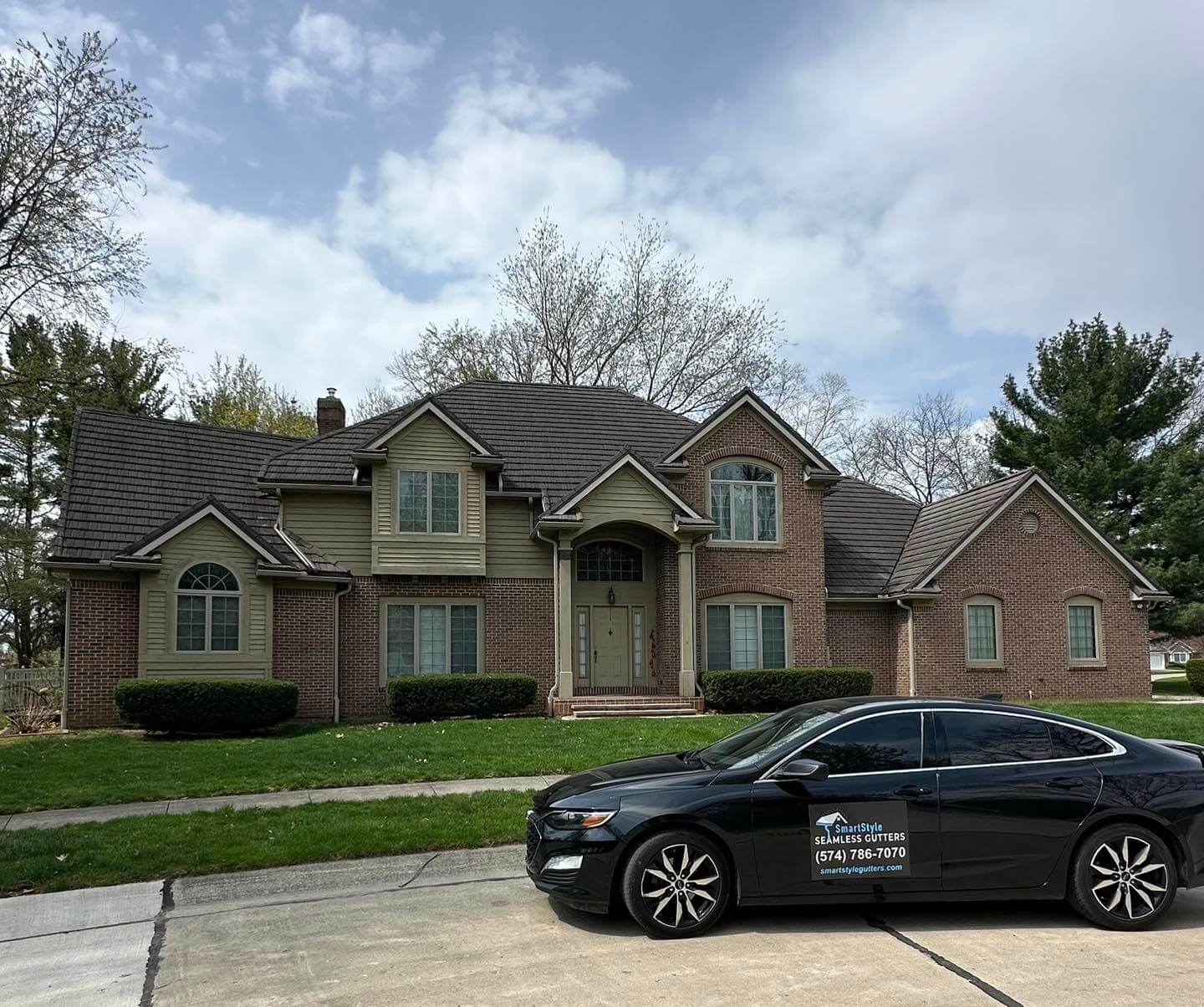
Seamless gutters usually last around 20 to 30 years, and in some cases longer, when they are installed correctly and maintained over time. That lifespan depends on more than just the metal itself. It depends on proper pitch, strong attachment, sound fascia boards, clean downspouts, debris control, roof runoff volume, and how well the gutter system handles Indiana weather. Homes in places like Middlebury, Elkhart, South Bend, Mishawaka, and LaGrange deal with heavy rain, wet snow, falling leaves, freeze-thaw cycles, and fast seasonal changes. All of that affects how long a gutter system can keep doing its job.
What Is the Normal Lifespan of Seamless Gutters?
For most homes, seamless aluminum gutters can hold up for decades if the system is installed with the correct size, spacing, slope, and drainage path. A continuous seamless run has fewer leak points than sectional gutters, which means fewer seams to separate, drip, or pull apart over time. That gives the system a better shot at staying watertight and structurally stable as the years go by.
That does not mean every seamless gutter system automatically lasts thirty years. A gutter line that was undersized, poorly pitched, or fastened into compromised wood can start failing much sooner. On the other hand, a properly installed system with solid hangers, clean downspouts, and routine care can outlast what most homeowners expect.
What helps a seamless gutter system last
- Correct slope so water drains cleanly to the downspouts
- Strong hidden hangers and secure fastening
- Healthy fascia boards behind the gutter line
- Proper downspout placement for roof runoff volume
- Routine cleaning and debris removal
- Fast correction of sagging, leaks, and overflow issues
What Causes Seamless Gutters to Wear Out Early?
The biggest lifespan killers are installation mistakes and neglect. Gutters that are too small for the roof area, too flat to drain, or too weakly attached will not age well. Water is relentless. It follows gravity every single time, and when the pitch is wrong or the downspouts are overwhelmed, that water starts sitting, backing up, overflowing, and stressing the entire system.
Debris is another major problem. Leaves, seed pods, shingle grit, and sludge can create standing water inside the trough. That extra weight puts stress on hangers and attachment points while trapped moisture accelerates wear. Overflowing water also spills behind the gutter and soaks the fascia, soffit, siding, and foundation edge. At that point, the gutter system is not just aging. It is actively helping water attack the house.
Common reasons seamless gutters fail sooner
- Poor pitch or low spots that hold water
- Too few downspouts for the amount of roof runoff
- Loose fasteners and hanger separation
- Rotten fascia behind the gutter channel
- Repeated clogging and overflow
- Storm damage, ladder dents, or tree impact
- Ice load and freeze-thaw expansion
- Cheap installation with weak planning and sloppy execution
How Northern Indiana Weather Impacts Gutter Lifespan
Northern Indiana is hard on exterior systems. Gutters here have to handle spring rain, summer storm flow, autumn leaf buildup, winter snow load, and repeated freeze-thaw cycles. Wet snow and melting ice add weight. Sudden temperature shifts create movement in metal. Heavy runoff from roof valleys can overload weak sections. Even a good-looking gutter can be under stress if it is not draining correctly in bad weather.
Winter is especially rough. Snow sits on the roof, begins to melt, then refreezes when temperatures drop again. Water entering the gutter channel can turn to ice and expand. Ice does not care about your budget. It pushes outward, adds weight, and increases the strain on hangers, corners, and attachment points. That is one reason regular inspection matters so much before and after winter.
How To Tell If Seamless Gutters Still Have Life Left
A gutter system does not need to look brand new to keep performing. Cosmetic wear is one thing. Functional failure is another. The real question is whether the system still moves water cleanly away from the roofline and away from the home without leaks, sagging, overflow, or backflow. If it does, there may still be years of service left in it.
But if you are seeing repeated leak spots, sagging runs, standing water, fascia staining, soil washout below downspouts, or water spilling over the front edge during storms, that system is warning you. Ignoring those warnings is how minor issues turn into siding damage, rotted trim, and drainage problems around the foundation.
Signs your gutters may still be in good shape
- Water flows directly to the downspouts during heavy rain
- No chronic sagging or visible low spots
- No major separation from the fascia
- No frequent leaks at corners or joints
- Downspouts carry water away effectively
- Only minor maintenance is needed
Signs replacement may be the better move
- Multiple recurring leaks or patch points
- Sagging sections or poor drainage pitch
- Overflow that keeps coming back
- Fascia damage behind the gutter line
- Loose fasteners or pull-away sections
- System is undersized for the roof and water volume
Can Seamless Gutters Be Repaired Instead of Replaced?
Sometimes yes. Sometimes no. A single loose section, a local drainage issue, or one weak hanger may be worth repairing. But when the same gutter system has sagging runs, repeated leaks, soft fascia, overflow problems, and weak attachment all at once, replacement usually makes more sense than playing patch-and-pray.
Homeowners often waste money by fixing the symptoms instead of the system. One leak gets sealed, then another shows up. One section gets tightened, then another starts sagging. At some point the structure itself is tired or wrong for the house. That is when a full replacement becomes the cleaner long-term decision.
Need a Real Answer About Your Gutters?
SmartStyle Seamless Gutters helps homeowners figure out whether their current system still has useful life left or whether it is time to replace it with a better-built solution.
How To Help Seamless Gutters Last Longer
Long gutter life comes from boring fundamentals that work. Keep the system clean. Fix small issues early. Make sure the fascia is solid. Do not ignore overflow. Make sure downspouts discharge far enough away from the house. And make sure the original system is actually built to handle the roofline and water load it was installed on.
This is where a lot of homeowners lose the plot. They assume gutters are just metal channels nailed to the roof edge. They are not. They are part of a drainage system that protects siding, trim, landscaping, basements, crawlspaces, and foundations. When that system is ignored, water starts finding other places to go, and those places are usually expensive.
Best ways to extend gutter lifespan
- Clean out leaves, sludge, and roof grit before overflow starts
- Correct drainage and pitch issues early
- Replace compromised fascia before it weakens the whole run
- Inspect the system after major storms and winter weather
- Keep downspouts open and draining away from the home
- Use a properly sized seamless system for the roof area
When Is It Time To Replace Old Gutters?
It is time to replace old gutters when they are no longer protecting the home consistently. That is the real benchmark. If water is spilling out, running behind the gutter, soaking the fascia, washing out mulch beds, or landing near the foundation, then the system is not doing its job. At that point, age matters less than performance.
If you are already at the stage where repairs are stacking up, it usually makes sense to compare your options for a new seamless gutter system built for proper drainage, cleaner water flow, and longer-term performance.
How long do seamless gutters usually last?
Most seamless gutters last around 20 to 30 years, depending on material quality, installation, weather exposure, drainage design, and maintenance.
What shortens the life of seamless gutters the most?
Poor slope, clogged debris, weak fascia, too few downspouts, storm damage, and repeated overflow are some of the biggest reasons gutter systems wear out early.
Are seamless gutters worth replacing instead of patching?
If the system has widespread leaks, sagging, drainage failure, or fascia damage, replacement is often the better long-term move compared with repeated short-term repairs.