
Gutter Guards Installed For Better Water Flow, Less Debris, And Stronger Drainage Performance
SmartStyle Seamless Gutters installs gutter guard systems that help block leaves, twigs, pine needles, shingle grit, seed pods, and roof runoff debris before they turn your gutter line into a clogged-up mess. This page is built to explain what gutter guards are, how gutter guard installation works, what kinds of gutter guards exist, why homes need gutter guards, and what separates a clean install from a junk install.
What Gutter Guards Are And What They Actually Do
Gutter guards are protective covers, screens, mesh systems, filter-style inserts, or solid-top designs installed over or inside a gutter channel to reduce debris entry while still allowing rainwater to drain into the gutter system. The whole point is simple: keep the gutter trough, outlet holes, elbows, downspouts, and drainage path flowing instead of letting wet leaves and roof runoff pack everything full. A gutter guard is not magic. It is a drainage-control component. When it is fitted correctly to the roof edge, gutter lip, pitch, and water volume, it helps the entire system work the way it should.
Mesh, micro-mesh, perforated aluminum, screen panels, reverse-curve covers, inserts, gutters, hangers, seams, fascia board, drip edge, roofline, downspouts, elbows, outlets, splashback, overflow, pitch, runoff, shingle grit, leaves, pine needles, acorns, seed pods, and stormwater flow.
Repeated clogging, standing water, heavy debris buildup, overflow in hard rain, dirty streaking on fascia, ice buildup from trapped water, landscape washout, basement moisture risk, and the constant ladder circus nobody wants to keep doing.
A guard does not magically correct bad slope, loose spikes, sagging sections, undersized downspouts, rotten fascia, broken seams, or a gutter line installed wrong in the first place. If the foundation of the system is trash, the accessory on top of it will still be trash.
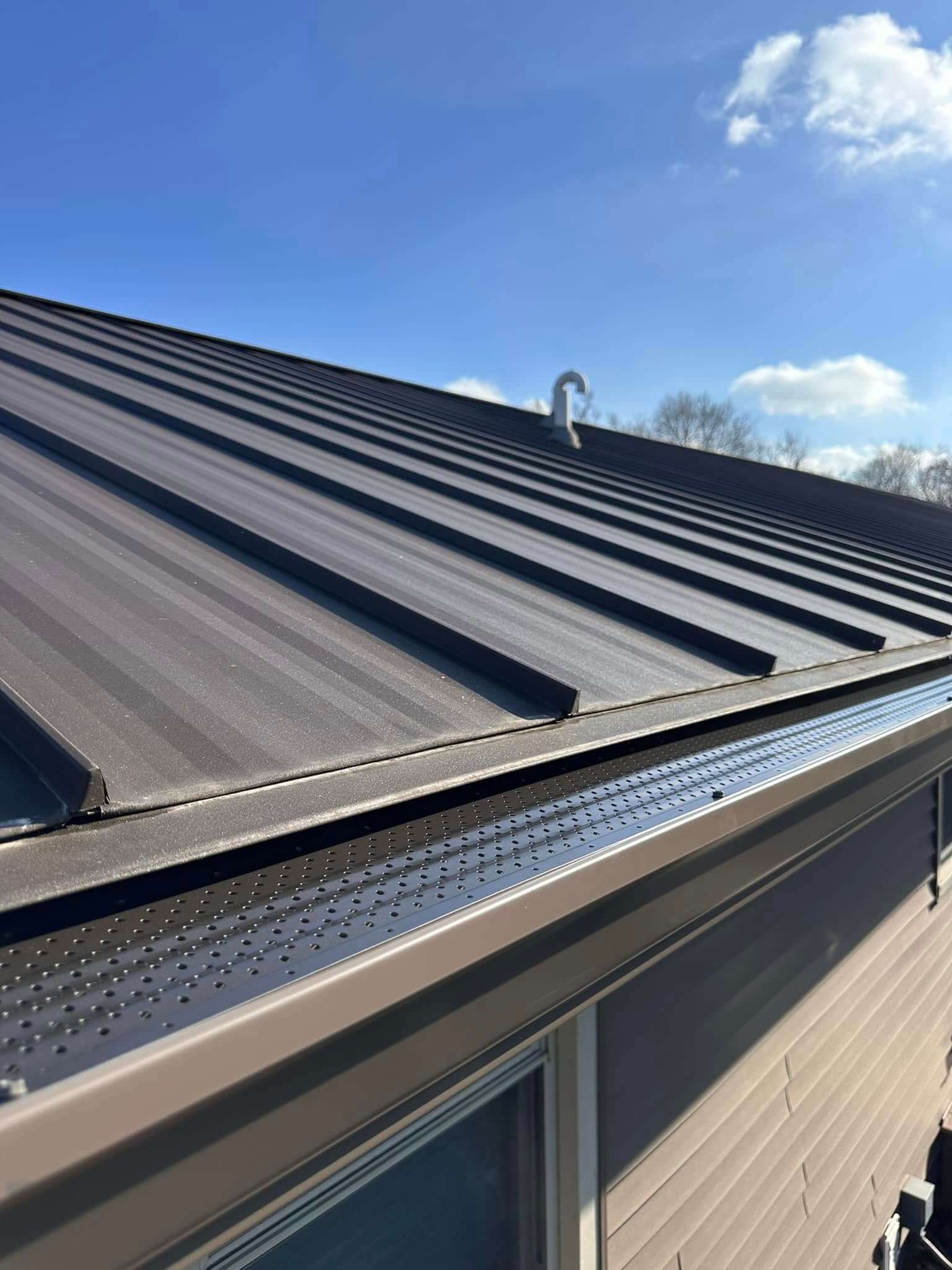
The Benefits Of Gutter Guards Go Way Beyond Just Fewer Leaves
Good gutter guard installation is about water management. The visible mess is leaves. The real problem is what happens after leaves trap moisture, hold grit, slow runoff, and choke the gutter channel. That is when you start seeing staining, overflow, fascia wear, wet soil at the foundation, and freeze-thaw problems in cold-weather months.
Less Debris Packing In The Trough
Guards help keep large leaf loads, maple helicopters, twigs, and roof debris out of the main channel so water can move instead of ponding.
Lower Cleanout Frequency
Most homes still need inspection, but the maintenance cycle usually shifts from repeated full cleanouts to periodic checks and minor surface clearing.
Better Downspout Performance
When debris is reduced at the top, fewer blockages build at outlet drops, elbows, and vertical downspout runs.
Reduced Overflow During Storms
The right guard design helps rainwater enter the gutter line while debris sheds away instead of creating a soggy dam at the roof edge.
Longer Gutter Life
Wet debris sitting in a trough accelerates corrosion, weight stress, seam wear, and sagging. Guards help reduce that constant abuse.
Foundation And Landscape Protection
Controlled drainage helps limit splashback, mulch washout, wet basement risk, erosion near the footing line, and ugly water scars.
Why You Need Gutter Guards On Homes That Deal With Leaves, Needles, Grit, Rain, Snow Melt, And Heavy Roof Runoff
Homes in leaf-heavy areas, wooded lots, neighborhoods with mature trees, roof valleys with concentrated runoff, and houses that already fight overflow are prime candidates for gutter guards. Add Northern Indiana weather into the mix and the drainage problem gets bigger. Rain, wind, debris, seasonal leaf drop, winter freeze, snow melt, and spring storms all hammer the gutter line. Without protection, the trough becomes the collection bucket for every filthy little thing that rolls off the roof.
Homes With Mature Trees
Oak leaves, maple seeds, twigs, cottonwood fluff, and small branches build fast and hold moisture even faster.
Homes With Asphalt Shingles
Shingle granules and roof grit wash into the gutter and turn into heavy sludge that slows drainage.
Homes With Steep Roof Sections
High water velocity can overwhelm cheap guard systems and expose bad installation immediately.
Homes Tired Of Ladder Work
If the owner is done climbing, scooping, rinsing, and repeating every season, guards start making a lot of sense.
Different Kinds Of Gutter Guards And How They Work
Not all gutter guards are built the same. Different roof materials, rainfall volume, leaf type, gutter width, and debris patterns call for different systems. The smart move is choosing the guard style that matches the roof edge and drainage behavior, not the one with the loudest sales pitch.
Micro-Mesh Gutter Guards
Micro-mesh systems use a fine stainless or aluminum mesh surface that filters out small debris while letting water pass through. These are strong for pine needles, roof grit, seed pods, and finer material that slips through wider screens.
- Strong for small debris filtration
- Good for high-detail protection
- Needs proper angle and fastening to perform well
Screen Gutter Guards
Screen systems use larger openings than micro-mesh and are often suited for bigger leaf loads. They can perform well when debris type and rain volume fit the design, but they are not always the answer for fine grit and tiny particles.
- Useful for larger leaves and common debris
- May allow smaller particles through
- Performance depends heavily on install quality
Perforated Aluminum Covers
These use rigid aluminum panels with patterned holes or openings that allow water entry while rejecting larger debris. They can offer strong durability and a cleaner finished look when fitted correctly.
- Rigid and durable
- Good structural feel
- Needs precise fit at roof edge and gutter lip
Reverse-Curve Or Surface-Tension Guards
These are designed to pull water around a curved edge while debris sheds off the front. They can work in the right application, but runoff behavior, roof pitch, and installation precision matter a lot.
- Built around water adhesion and curve flow
- Can work well in certain roof conditions
- Bad fitment can cause overshoot or messy performance
Foam Inserts
Foam inserts sit inside the gutter and let water pass through the material while blocking debris from filling the trough. They are simple in concept but can have limitations depending on climate, buildup, and long-term wear.
- Easy concept
- Sits directly in the gutter channel
- Not always the strongest long-term option
Brush Inserts
Brush-style guards use bristles set inside the gutter to interrupt debris buildup while water flows through. They are one of the simpler styles, but they are not the top choice for every debris type or every roofline.
- Basic debris interruption
- Simple concept
- Not ideal for every environment
How To Install Gutter Guards The Right Way
Gutter guard installation is not just snapping a product into place and calling it a day. A proper install starts with inspection, prep, fitment, drainage planning, and fastening. The roof edge, drip edge, gutter width, gutter style, hanger spacing, trough pitch, seam condition, outlet placement, and downspout path all matter. Skip those checks and the whole install can get stupid fast.
Step 1: Inspect The Existing Gutter System
Before any guard goes on, the installer should inspect sagging, loose hangers, spike and ferrule issues, seam leaks, fascia softness, outlet restrictions, standing water, and whether the trough is pitched correctly toward the downspouts.
Step 2: Clean Out Debris And Roof Grit
The gutter line has to be cleaned out first. Leaves, mud, grit, wet sludge, twigs, granules, and packed debris all need to come out so the guard system is not installed over an already failing drainage channel.
Step 3: Repair Problems Before Covering Them Up
Loose brackets, hidden leaks, damaged fascia contact points, crushed sections, poor pitch, and weak seams should be addressed before the guard is installed. Covering broken work with new product is clown behavior.
Step 4: Measure The Roof Edge And Gutter Profile
The installer should verify the gutter style, width, roof drip edge position, shingle overhang, and where the guard will seat. A sloppy fit at the roof edge is where many bad installs begin.
Step 5: Cut And Fit The Guard Sections Correctly
Guard panels or mesh sections should be cut cleanly, aligned tightly, and installed so water enters the gutter channel without leaving big gaps for debris intrusion. Corners, miters, valleys, and transitions matter.
Step 6: Fasten For Stability And Water Performance
The guard needs to be anchored in a way that resists lifting, bowing, rattling, and debris creep. Fastening also affects angle, entry path, and how water behaves during hard rain and roof runoff surges.
Step 7: Check Drainage, Not Just Appearance
A finished install should be checked for flow path, outlet behavior, and whether the system supports clean water entry into the trough. A guard that looks neat but dumps water over the front edge is a pretty disaster.
What Affects Gutter Guard Performance After Installation
Gutter guard performance depends on more than the product itself. Roof pitch, roof material, rainfall volume, tree cover, roof valleys, gutter size, downspout capacity, shingle grit, and even wind direction can affect how a system behaves. That is why installation quality matters so much. The best guard on paper can still fail when the setup is wrong.
Roof Pitch And Water Speed
Steeper roof sections can deliver water with more speed. The guard style and angle need to account for that runoff behavior.
Debris Type
Broad leaves, pine needles, fine seeds, blossoms, moss particles, and shingle granules do not all behave the same. The guard choice should reflect that.
Gutter Size And Downspouts
Five-inch and six-inch systems, outlet size, downspout count, and elbow layout all affect whether the whole drainage line can keep up.
Gutter Guard Installation In Your Area
This parent page stays focused on gutter guards as a core service. Use the city pages below for local service information, local project relevance, and city-specific gutter guard service details.
Gutter Guard Questions Answered Without The Fake-Expert Nonsense
Straight answers on installation, maintenance, debris control, and what makes a guard system worth putting on a home.
Do gutter guards completely eliminate maintenance?
No. They reduce maintenance hard, but they do not make a gutter system immortal. Surface debris may still need occasional clearing, and every system should still be inspected after major storms or seasonal debris drops.
Are micro-mesh gutter guards better than screen guards?
Not automatically. Micro-mesh is strong for finer debris like pine needles and grit, while wider screen systems can work well for broader leaf loads. The right answer depends on the roofline, water volume, debris type, and installation quality.
What causes gutter guard systems to fail?
Bad pitch, weak fastening, poor fit at the roof edge, wrong guard style for the debris pattern, ignored downspout issues, and installing a new product on top of an already broken gutter system.
Can you install gutter guards on existing gutters?
Yes, if the existing gutters are structurally sound and worth keeping. If the trough is sagging, leaking, loose, undersized, or rotting away at the fascia line, repairs or replacement may need to happen first.
Paste your full-width review widget here.
Get Gutter Guards Installed The Right Way
Stop letting leaves, grit, and overflow beat up your gutter system. Get a gutter guard setup installed with the fit, fastening, and drainage logic the system actually needs.
Fast scheduling • clean install options • no runaround
Request your gutter guard quote now